Master of Science in Industrial Mathematics


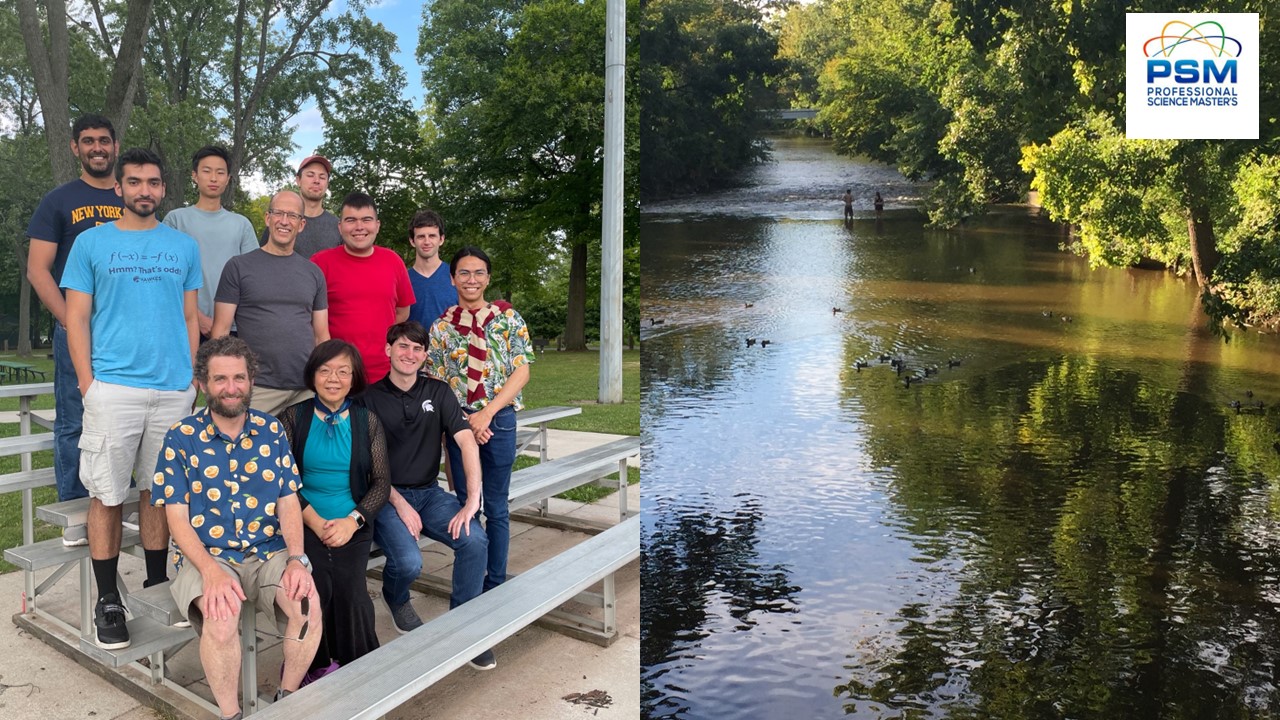
Message from the Department Chair
Welcome to the Master of Science in Industrial Mathematics (MSIM) in the Department of Mathematics at Michigan State University!
The MSIM is a well-established Professional Science Master’s (PSM) program founded in the late 1990s with initial support from the Alfred P. Sloan Foundation. For nearly a quarter century we have been training successful data analysts, data scientists, mathematicians, and leaders in industry.
Our comprehensive curriculum consists of two years of coursework taken in parallel with professional mentoring focused on project development, project management, and communication skills. We aim to help students pursue a PSM degree while developing an understanding of the workforce skills valued by industrial employers. Our students follow individually developed plans of study focused on mathematical and statistical tools, computer science principles, data analytics, and the basic ideas of engineering and business.
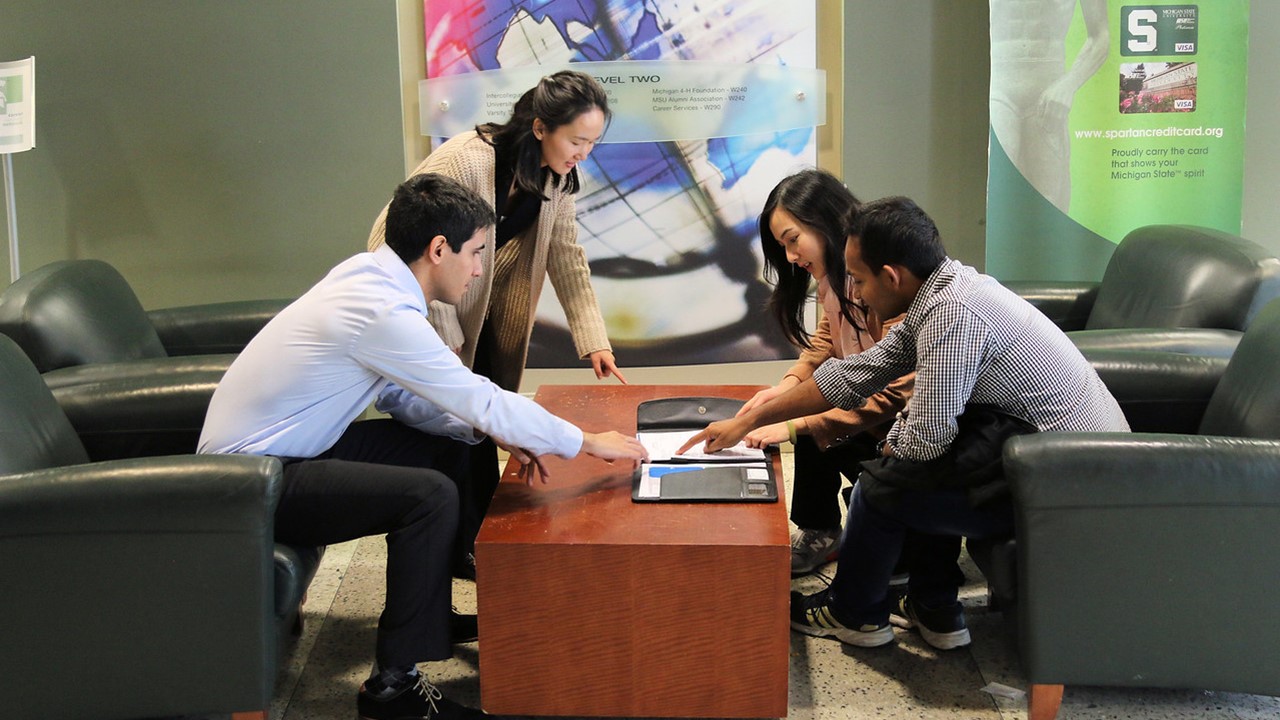
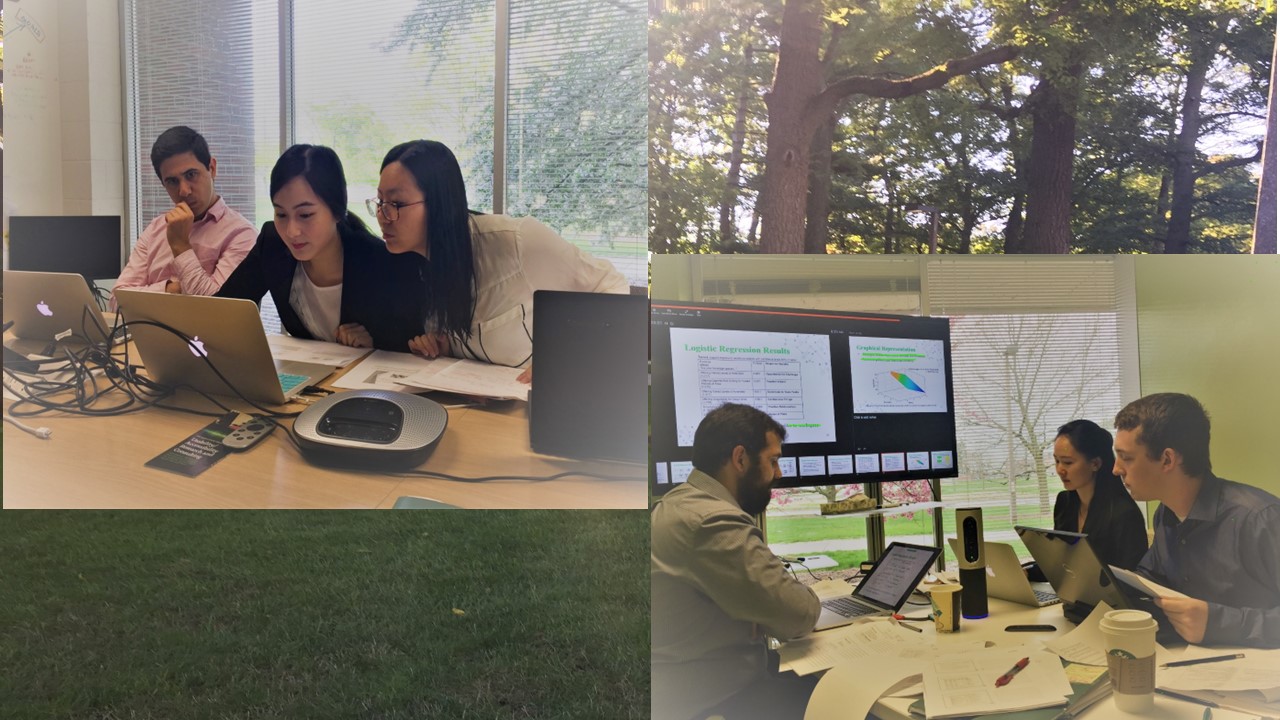
Over more than two decades we have developed strong connections with local companies through our industrial advisory board, through projects undertaken by MSIM students, and by the placement of our graduates into positions at local firms. We invite you to explore the MSIM website (https://math.msu.edu/msim/) to learn about over one-hundred projects undertaken by MSIM students in collaboration with local industry and to read about what graduates have to say about our program.
We look forward to the MSIM program continuing to flourish as a successful program for training generalized problem solvers of great versatility. We are here to support you and your continued success as a student in the MSIM program.
Sincerely,
Overview
The goal of Master of Science in Industrial Mathematics (MSIM) program is to produce generalized problem solvers of great versatility, capable of moving within an organization from task to task. The major success of the program is industrial partnerships and strong connections with local companies (See Industrial Projects and Partners). The program has been successfully training successful data analysts/data scientists, mathematicians, and problem solvers for leadership positions in industry for two decades because
- The graduates will have studied standard mathematical and statistical tools, and computer science principles to strengthen data analytics skills and machine learning skills.
- They will have gained experience in hands-on project development for real-world problems proposed by local companies and they will have received training in technical writing for the project reports to meet industrial standard in modes of industrial communication.
The MSIM program has blossomed since its inception since late 90s. With initial support from the Alfred P. Sloan Foundation, our program is well-known as one of the earliest and the best-established Professional Science Master’s (PSM) Programs (PSM affiliation in 1998). According to the national PSM website at https://www.professionalsciencemasters.org the PSM program nationwide is an innovative, new graduate degree designed to combine advanced training in science or mathematics, while simultaneously developing workplace skills highly valued by employers. “PSM programs are designed for students who are seeking a graduate degree in science or mathematics and understand the need for developing workplace skills valued by top employers. A perfect fit for professionals because it allows you to pursue advanced training and excel in science or math without a Ph.D., while simultaneously developing highly-valued business skills.” The PSM programs have two decades of history with continued success because of High Demand and Science-Plus Curricula which is consistent to the success of our program as one of long-standing PSMs for nearly a quarter century.
Program Components
The MSIM program requires 30 credits of coursework, the successful completion of the Certificate Program in Project Management, and the successful completion of an oral masters certifying examination on the student’s portfolio of their completed projects (Read MSIM Student Handbook for more descriptions). The program curriculum is summarized below:
- Core Courses in Industrial Mathematics (6 credits, MTH 843 (Fall), MTH 844 (Spring))
- Elective and Cognate Courses (24 credits, MTH, STT, CSE/CMSE etc.)
- Certificate Program in Project Management (PHM 857, as for a “not-for-credit” option, first Summer)
- Portfolio Defense (last semester)
The program is only available on-campus full-time (no options for part-time) and only accepts applications for Fall Semester.
Graduates' Employment
The PSM in Industrial Mathematics at MSU is designed to help students developing both of technical skills and soft skills to meet a growing demand in STEM fields. This is a successful model of PSM program in preparing students for their placements, for instance, since late 90s, continued preparing and producing data analysts, actuarial analysts, and generalized problem solvers in business and engineering setting moving within an organization from task to task, up to now emphasized on training and producing data analysts/data scientists to meet requirements in a new era of data science. For all of the MSIM classes from the first graduation class to the most recent one, ~100% of the graduates have obtained a job offer that were actively seeking employment.
The MSIM graduates possess the following skills (See MSIM Testimonials):
- Applied mathematical training and statistical tools.
- Familiarity with business environment.
- Real-world project experience working with local industries.
- Deeper understanding of data mining and computational issues.
- Technical writing ability (e.g., project reports, memos).
- Good communication skills.
Below are recent years’ placements of the MSIM graduates (See Graduate Placements Statistics for more details):
| Job Title | Company | Location |
|---|---|---|
| Actuarial Analyst | Accident Fund | Lansing, MI |
| Technical Consultant I | Acumen Solutions | Seven Hills, OH |
| Software Developer | Auto-Owners Insurance | Lansing, MI |
| Data Scientist II | Caterpillar | Peoria, IL |
| Product Engineer | Chrysler | Auburn Hills, MI |
| Feature Developer | Dealer Inspire | Naperville, IL |
| Associate | Discover Financial Services | Riverwoods, IL |
| Data Analyst | dunnhumby | Cincinnati, OH |
| Data Analyst | MSX Americas, Inc. | Dearborn, MI |
| Software Engineer | ForteMedia, Inc. | Santa Clara, CA |
| Data Scientist | Hello | San Francisco, CA |
| Portfolio Analyst | Loan Science | Austin, TX |
| Statistician | Marketing Associates | Detroit, MI |
| Emerging Leaders Associate | Nielsen | Tampa, FL |
| R&D Analyst II | Progressive Insurance | Cleveland, OH |
| Analyst | Rubicon International | Portland, OR |
| Risk Analyst | Transamerica | Cedar Rapids, IA |
| Data Analyst | Unum | Portland, ME |
| Analyst | Urban Science | Detroit, MI |
| Associate Data Scientist | Zuben AI | Minneapolis, MN |
Admission
See Admission Requirements to learn more about admission and how to apply. Read MSIM Student Handbook and Frequently Asked Questions for MSIM Applicants for more information of the program.
If you have any additional questions, please contact us at msim@math.msu.edu.
For particular information about the program, contact Dr. Peiru Wu (peiruwu@msu.edu), Director of PSM in Industrial Mathematics (or MSIM) Program.
For any additional questions regarding the program curriculum and/or the extension deadline for the application to the MSIM program, contact us at msim@math.msu.edu